Living with several cats has always brought a special energy into my home. With every new purr and playful leap, I’ve realized how a well-designed environment can shape the mood and health of every cat. When cats have places to climb, hide, play, and relax, they seem calmer, friendlier, and even more connected to each other – and to me. I want to help you discover the best steps to create enrichment spaces that work for both your home and your many feline companions.
Understanding the needs of multiple cats
In my experience, it’s easy to fall into the habit of treating cats as if they all want the same things. However, when you’re caring for more than one cat, it’s clear very quickly that each one needs space to express their individuality. Science agrees: research on stress levels in single versus multi-cat houses didn’t show higher stress overall for group living, especially for younger cats. Instead, I’ve found that stress comes from overcrowding and lack of choices—not from the number of cats alone.
Here are the things I’ve learned to consider with multi-cat homes:
- Each cat feels secure when it can retreat alone at times.
- Competition for food, litter trays, and preferred sleeping spots can lead to arguments.
- Cats need vertical spaces, hiding places, scratching areas, and safe observation points.
- Enrichment is not just about toys, but about meeting all their basic needs (resources, territory, stimulation, and comfort).
This approach is also supported by owner surveys on indoor cat resources: litter trays, scratching posts, toys, and vantage points like windows top the list. That’s where I start every time.
Planning your enrichment zones
Before moving a single piece of furniture or setting up a scratching post, I walk through my space and try to see each room from a cat’s perspective. Where would I want to hide if I needed a break? Where could I watch the birds outside?
I always make sure to:
- Divide the home into small territories, especially in larger households.
- Give cats the option for privacy and rest in each area.
- Create paths that allow cats to navigate without bumping into each other too often.
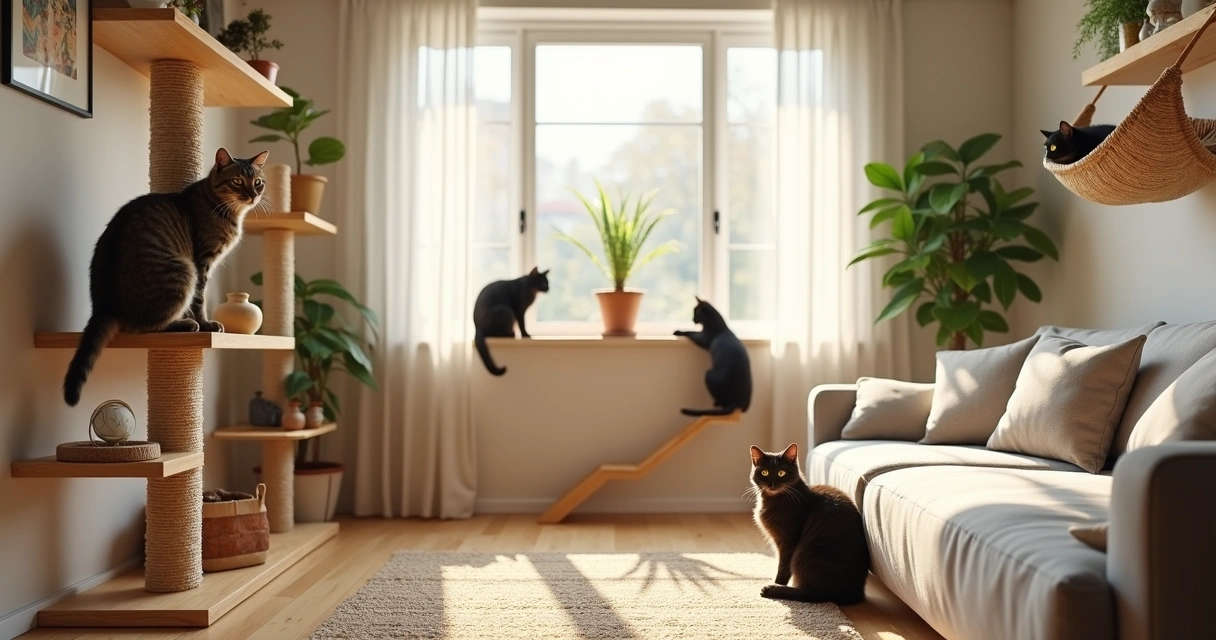
- Use vertical space – think shelving, cat trees, and bridges – to double the usable territory.
Space up high can prevent many arguments on the ground.
I’ve seen the positive effect of zones with my own cats. Once I added more shelves and baskets on different heights, the tension simply faded away.
Must-have features for enrichment spaces
Data from a large study of cat owners confirms what most of us sense: play, access to windows, hiding spots, and toys are all part of a happy indoor cat’s life. More than three-quarters played with their cats and nearly three-quarters gave window access. I set these as the baseline features for every enrichment space.
- Vertical spaces: Cat trees, wall shelves, secured bookcases, or sturdy furniture. Twice as many per room as you have cats is a good target.
- Hiding places: Boxes, tents, baskets, or custom-made cubbies. Place them in quiet areas, sometimes up high.
- Scratching surfaces: Posts, boards, or flat pads, both horizontal and vertical. Put one near every resting or play area.
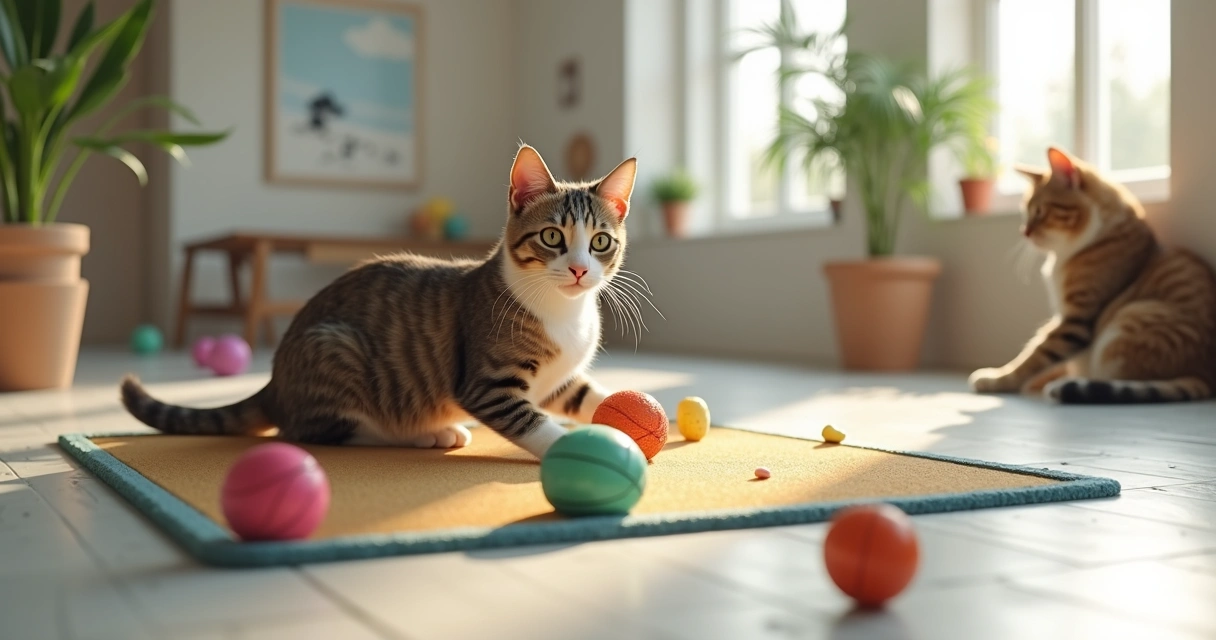
- Interactive toys: Fishing pole toys, puzzle feeders, soft balls, and tunnels. Rotate toys weekly to keep cats interested.
- Accessible windows: Safe perches or beds in front of windows, ideally with views of birds or garden life.
- Multiple food and water stations: Several locations, well apart, to avoid crowding and competition.
- Litter trays: One per cat, plus one extra, each in a quiet, private corner (never side by side).
By adding these elements in every zone, I’ve noticed my cats stake out their favorites, but nobody gets left out.
Arranging spaces for harmony and fun
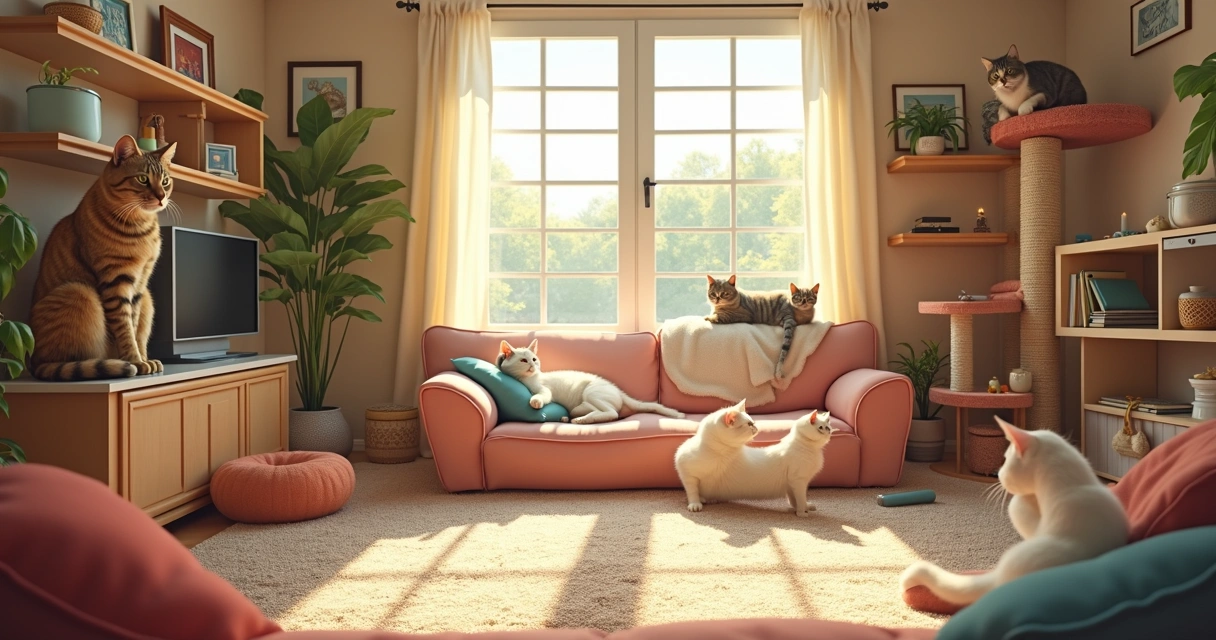
I prioritize giving cats both community spaces and personal retreats. Here’s how I usually lay out enrichment zones:
- Clustered sleeping spots to encourage peaceful group nap times.
- Private, enclosed beds or boxes for solo sleeping away from noise.
- Window towers or sills with safe perch pads.
- Treat puzzles and play stations far from litter and food to mimic “hunting.”
- Scratching posts at the entrance to every primary room.
- Cubby holes hidden among bookshelves or underneath furniture for the shyest cats.
These changes, inspired by research into lower stress in enriched shelter environments, make a visible impact. Cats become less jumpy and start exploring with more confidence. Sometimes I’ll sit and watch as one cat climbs high to nap, while another chews on a toy below. Both seem content, and harmony grows.
Overcoming common challenges in multi-cat homes
Multi-cat homes have their share of quirks. Here’s how I tackle the most common issues:
- Resource guarding: If anyone gets possessive over food or beds, I add more resources and spread them out. Avoiding direct line-of-sight between eating and resting areas keeps the peace.
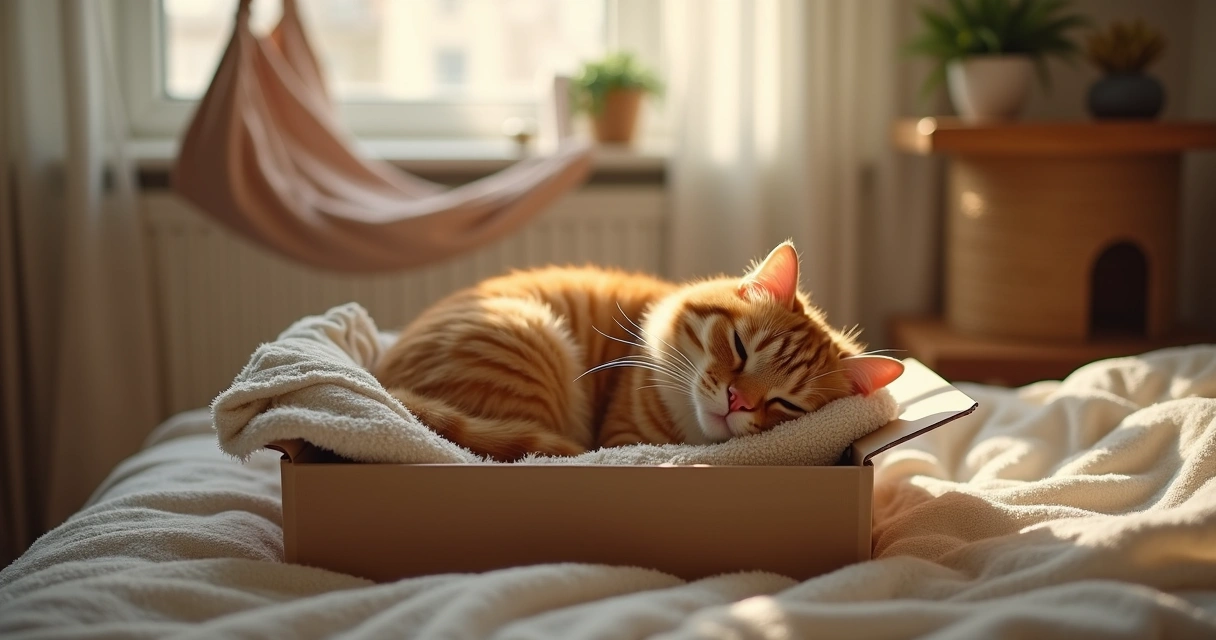
- Boredom and restlessness: Rotating toys, re-arranging boxes, or introducing new climbing options sparks interest. Even a cardboard box can be a game-changer for a bored cat.
- Lack of privacy: Creating “wall” shelves or tall furniture that section off corners helps everyone find a place to retreat. This reduces fights and stress almost overnight.
- Limited space: In apartments, I use vertical shelving and window hammocks to maximize square footage. A space-efficient approach brings enrichment even to smaller homes – a topic close to my heart and an area where support from professionals like those at Dogtown’s grooming and care services can inspire more ideas.
On days when I can’t entertain my cats as much as I’d like, using feeder puzzles or session-based play routines makes a big difference. It’s satisfying to see how their moods change with just a little planning.
Connecting enrichment with routine and care
After setting up enrichment spaces, I weave them into the daily routine. Each morning, I open the blinds to let sunlight hit the window perches, and at night I rotate toys or sprinkle a bit of catnip in different play areas. I also use scheduled play, combining it with reward-based training ideas I picked up from professional training resources like Dogtown’s training programs. This practice supports healthy relationships and keeps my cats sharp and happy.
Boarding and daycare support—like the services offered by Dogtown’s day camp and boarding—can supplement at-home enrichment too. Trusted environments provide extra stimulation and social opportunities when you can’t be at home as much as you’d like.
Evaluating and refining your setup
I believe every living space changes over time. As your cats age or new kittens join, their preferences shift. I observe which areas they use most, which get ignored, and which cause tension. By moving a box, shifting a perch, or adjusting food placement regularly, I fine-tune the setup to suit my group’s needs – always keeping stress low and exploration high. This fits well with research suggesting regular assessment against “five basic systems,” as found in reviews of enrichment needs for indoor cats.
If you want professional feedback or new ideas, discussing options with animal care experts or exploring facilities like Dogtown’s dog daycare can bring renewed inspiration. Often, seeing creative setups in person has helped me reevaluate what’s possible back home.
Conclusion: Enrichment brings out the best in every cat
Providing enrichment spaces for multiple cats at home is one of the most rewarding things I’ve done as a pet owner. With a little creativity and a good plan, even a small space becomes an adventure for every cat under your roof. If you’re eager for more guidance, want to see professional enrichment examples, or need grooming and training support, Dogtown’s team in Gloucester, MA, is ready to help you and your pets experience life at its happiest and healthiest. Reach out to schedule a pre-enrollment assessment and discover how your cats can thrive every day.
Frequently asked questions
What is a cat enrichment space?
A cat enrichment space is an area designed to meet a cat’s instinctive needs for play, exploration, scratching, hiding, and resting. It can include shelves, toys, scratching posts, perches, and cozy sleeping spots. Such spaces prevent boredom and frustration, support healthy behavior, and encourage curiosity, which is especially important for indoor cats and multi-cat households.
How to separate spaces for multiple cats?
To separate spaces for multiple cats, provide each cat with its own resources and hiding places in different parts of your home. Use vertical elements like shelves, window perches, and cat trees to give them private retreats. Avoid placing food bowls, litter trays, and beds too close together, which can cause tension. Add visual barriers or furniture to create distinct paths and areas, giving every cat a sense of territory and safety.
What are the best cat toys for enrichment?
The best cat toys for enrichment include interactive wand toys, treat-dispensing puzzles, crinkle balls, tunnels, and toys that mimic hunting. Rotating different types of toys each week keeps playtime novel and exciting. Catnip toys and cardboard boxes can also stimulate interest and encourage activity, especially for cats who seem less playful.
How can I prevent cats from fighting?
Prevent cats from fighting by offering plenty of resources—food, water, litter trays, and sleeping areas—distributed throughout your home. Make sure each cat has access to quiet retreats and vertical spaces. Supervised play, positive reinforcement training, and interactive games can also strengthen positive bonds. If conflicts persist, consider consulting animal behavior professionals who understand multi-cat social dynamics.
What is the cost of setting up enrichment spaces?
The cost of setting up enrichment spaces varies by how much you DIY versus buy. Simple changes like adding boxes, rearranging furniture, or making window perches with cushions can be almost free. Investing in cat trees, wall shelving, or automatic puzzle feeders can range from $20 to several hundred dollars, depending on your choices. Many pet owners start small and build gradually, adapting as they observe their cats’ preferences and needs.